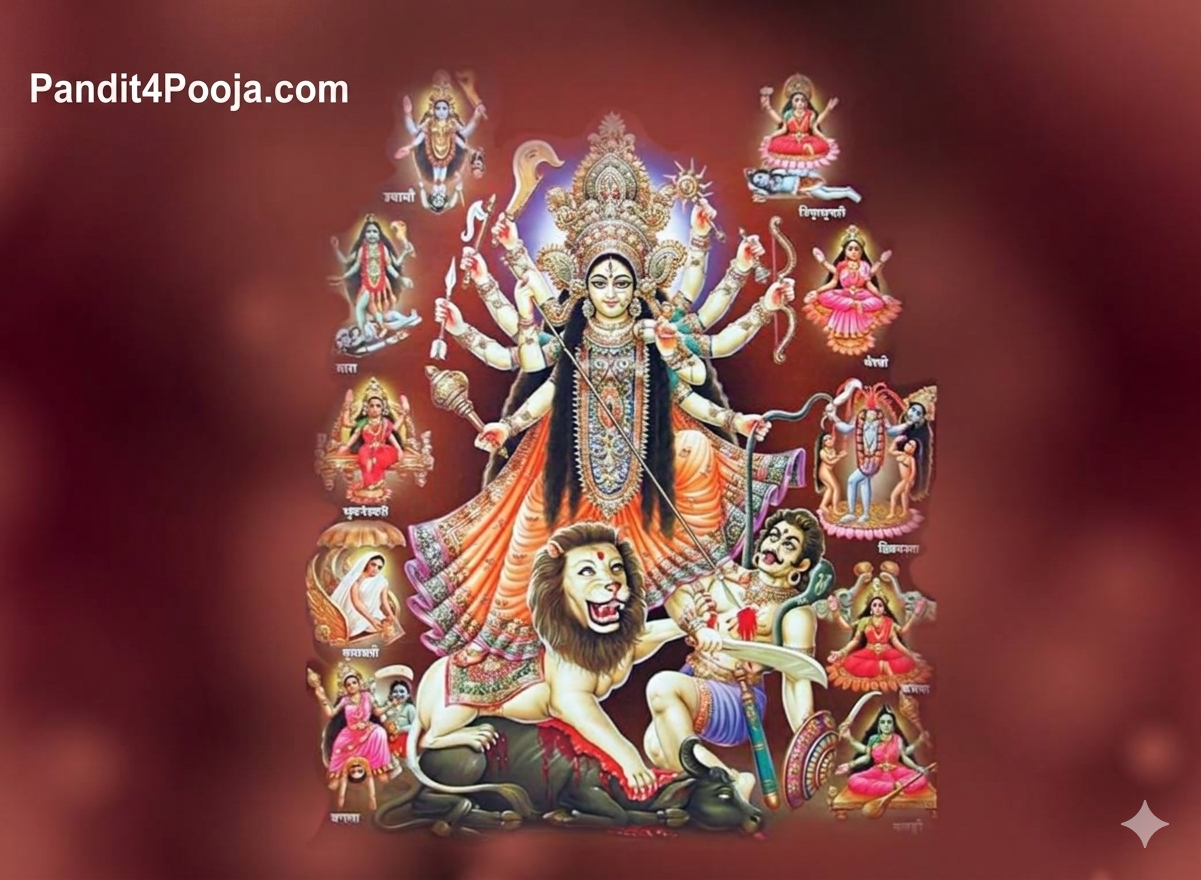
Das Mahavidya Anushthan is a traditional Shakta and Tantric spiritual practice dedicated to the ten manifestations of Goddess Adi Parashakti. Each Mahavidya represents a distinct aspect of divine feminine energy, encompassing transformation, protection, wisdom, prosperity, spiritual awakening, and liberation.
The Ten Mahavidyas
1. Maa Kali
Represents time, transformation, ultimate reality, and the dissolution of negativity and fear.
2. Maa Tara
Associated with protection, compassion, spiritual guidance, and liberation from difficulties.
3. Tripura Sundari (Shodashi)
Represents beauty, harmony, divine consciousness, spiritual bliss, and the balance of creation.
4. Maa Bhuvaneshwari
The cosmic mother associated with the universe, space, creation, and divine sovereignty.
5. Maa Bhairavi
A fierce manifestation of Shakti associated with courage, transformation, discipline, and overcoming obstacles.
6. Maa Chhinnamasta
Symbolizes self-transcendence, spiritual awakening, sacrifice, and transformation of consciousness.
7. Maa Dhumavati
Associated with detachment, wisdom gained through adversity, and overcoming illusion and worldly attachments.
8. Maa Bagalamukhi
Associated with protection, control over harmful speech and intentions, and overcoming opposition and obstacles.
9. Maa Matangi
Represents wisdom, divine speech, creativity, knowledge, music, and spiritual expression.
10. Maa Kamala
The Tantric form of Lakshmi, associated with prosperity, abundance, auspiciousness, and material as well as spiritual wellbeing.
Significance of Das Mahavidya Anushthan
The Anushthan is traditionally undertaken with a specific Sankalpa and may involve selected Mahavidya mantras, japa, puja, yantra worship, meditation, and homa according to the prescribed tradition.
Devotees traditionally undertake Mahavidya worship with the intention of:
- Spiritual protection and inner strength
- Overcoming obstacles and persistent difficulties
- Removing negative influences and fears
- Spiritual purification and transformation
- Developing wisdom, discipline, and mental clarity
- Supporting prosperity, harmony, and overall wellbeing
- Deepening spiritual practice and devotion
How the Anushthan Is Performed
Das Mahavidya practices can involve specific mantras, yantras, nyasa, japa, puja, meditation, and homa. The exact procedure, number of repetitions, duration, and associated rituals depend on the Mahavidya being worshipped and the practitioner’s Sankalpa.
Because Tantric practices are tradition-specific, the Anushthan should be performed under the guidance of an experienced Pandit or qualified Guru familiar with the relevant Shakta/Tantric tradition.
Book Das Mahavidya Anushthan
Connect with Pandit4Pooja to discuss your Sankalpa, required Mahavidya Anushthan, location, duration, and ritual requirements with our Pandit Ji before booking.
Reviews
There are no reviews yet.